If you are a regular reader of this blog, you are probably also a listener to the Acquired podcast. I am, although I mostly listen to old episodes and remain at least three years behind. But I recently made an exception for an episode on Formula 1, released on March 2, 2026.
Many times in the last decade, I thought about writing about the Formula 1 LBO. When CVC exited, I was working in PE, and the deal struck me as a home run in a not-so-obvious industry. When I learned about the new Acquired episode in March, part of me was disappointed that they had beaten me to it. But on the other hand, I knew they had covered the story better than I ever could. So I blocked off an afternoon, jumped on my home trainer and launched the podcast.
The podcast was exactly as expected: well researched, with excellent storytelling. It also confirmed that any attempt to cover the F1 story after Acquired would be pointless. The best I could do was recommend that readers of Tiny Finance Stories listen to it. (Admittedly, cycling for 4.5 hours while staring at a wall may not be the best way to appreciate its content).
Nonetheless, the podcast inspired another story.
Much of the Formula 1 saga is about Bernie Ecclestone’s business acumen. Ben Gilbert and David Rosenthal, as part of their deep dive, quoted Eddie Jordan:
Anyone who has had a business, sold it four times, never bought it back, never lost control, and still owns it is pretty special. And do you know the most important thing? He never f**king owned it in the first place.
Eddie Jordan, Tatler magazine, 2012 - as reported by The Gentleman’s Journal
This quote reminded me of another character in another glamorous industry: Kirk Kerkorian (June 6, 1917 – June 15, 2015), a National Hero of Armenia.
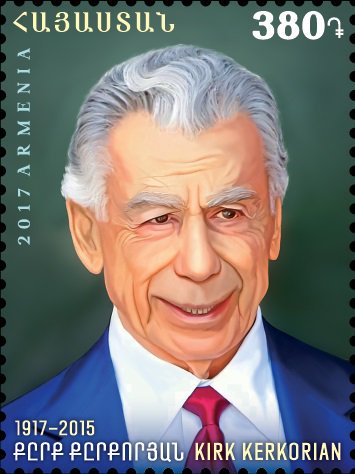
Kerkorian received the country’s highest state honor, which had less to do with a career in Armenia - for he was born in the US to Armenian immigrant parents - than with what he did with the fortune he made in America: he gave more than $1bn to charitable causes, much of it to help Armenia.
Kerkorian was a self-made billionaire, and a very different character from Ecclestone. He was intensely private and, while he could not entirely escape the complications of a successful man’s life beyond a certain age - a third marriage that lasted a month, a fourth that broke down after 57 days - he largely avoided the spotlight. Ironically, he made his fortune in two highly visible industries: casinos and movie studios.
Eddie Jordan’s joke about Ecclestone reminded me of Kerkorian because Kerkorian owned Metro-Goldwyn-Mayer several times. He first took control in 1969, sold parts of it in 1986, bought many of them back through United Artists a few months later, sold again in 1990, and returned for a third round in 1996. Obituaries usually simplify this to: he bought and sold MGM three times. Three was Kerkorian’s magic number. He also built the largest hotel in the world three times: the International in 1969, the original MGM Grand in 1973 and a new MGM Grand in 1993.
Kerkorian’s fame is tied to the MGM acronym although what it represented changed over time: a film studio, a film library, a casino company, or the mere right to put a roaring lion above a hotel entrance. The hotels became progressively larger, and the studio became progressively harder to define.
The MGM story belongs on this blog because it illustrates how American finance learned to extract value from increasingly intangible assets, starting with the MGM brand or media libraries, by separating these assets from the operations. Many restructurings occurred along the way. And each time, Kirk Kerkorian was there to pick up the pieces.
The origins of MGM
Metro-Goldwyn-Mayer was created in 1924, when Marcus Loew, who owned a chain of theaters, combined three film companies:
- Metro Pictures, which Loew had acquired for about $3m in 1920.
- Goldwyn Pictures, acquired for about $5m in 1924. Goldwyn Pictures owned the iconic “Leo the Lion” trademark that would become the MGM logo, and the Ars Gratia Artis motto.
- Louis B. Mayer Pictures, also acquired in 1924, for around $75,000. Its most valuable assets were two individuals: Louis B. Mayer, who would run the combined studio, and Irving Thalberg, who would supervise production.
This was the old Hollywood model in its purest form: a vertically integrated business employing actors and directors under contract, producing films on its own lots and distributing them, while Loew’s supplied a chain of theaters. And it worked remarkably well for several decades.
MGM-Loew’s recorded a $4.7m profit in its first full year, and Ben-Hur, released in 1925, cemented its reputation. MGM quickly became one of Hollywood’s most prestigious filmmaking companies -among the early users of Technicolor in the 1920s-, producing hit after hit and collecting Academy Awards.
MGM had inherited big names from its predecessor companies and added more stars to the payroll to capitalize on filmgoers’ demand. It also hired leading directors. The slogan was “more stars than there are in heaven”. The economics, however, weren’t always stellar. For example, The Wizard of Oz (1939) was a critical success, but its production costs were so high that it only moved into profit after its 1949 reissue.
The studio lot was a large fixed-cost machine due to sound stages, sets, costumes, writers, technicians and contracted talent, but the network of theaters made the machine easier to feed because distribution was reasonably predictable. In the 1940s, MGM started to focus on cost control, notably by limiting expensive star contracts, but it continued to innovate. It released successful musicals with Fred Astaire, Judy Garland, Gene Kelly and Frank Sinatra. MGM Records was founded in 1946 to sell soundtrack recordings. MGM also emerged as an animation heavyweight, thanks to William Hanna, Joseph Barbera and Tex Avery. Tom and Jerry cartoons won seven Academy Awards between 1943 and 1953.
In the 1950s, the machine began to break.
The US Supreme Court’s 1948 Paramount decision set in motion the separation of the major studios’ theater chains from production and distribution, and restricted practices such as block booking. For Loew’s Inc., it took years to unwind ; the separation from MGM was not completed until 1959. Television also gave families a cheap reason to stay home, making audiences less predictable while the cost of individual productions rose. MGM struggled to adapt to the new economic reality.
There were still major hits, such as Ben-Hur in 1959, but by the late 1960s the studio was losing money. Too many box-office failures, not enough focus. The company diversified into real estate, its shareholder meetings became an arena for proxy fights, and control changed hands several times. After writing off films made in previous years, MGM posted a $35.4m loss for the fiscal year ending August 31, 1969.
It was the perfect target for a certain type of businessman, later known as a corporate raider.
A pilot lands in Hollywood
Kirk Kerkorian wasn’t destined to be a Hollywood mogul. He left school early, boxed under the name Rifle Right Kerkorian and learned to fly before the US entered the Second World War. During the war, he ferried aircraft across the Atlantic.
After the war, he started an aircraft trading business while working as a general aviation pilot. In 1948, he bought a small charter airline, Los Angeles Air Service, which eventually became Trans International Airlines. TIA was one of the first charter operators to adopt jets, buying a DC-8 in 1962 and quickly putting it to work on a military contract. He sold the airline to Studebaker that same year.
During this first part of his professional life, Kerkorian bought and sold aircraft, flew gamblers to Las Vegas and learned something that would serve him for the rest of his career: a physical asset can have one value as part of an operating company and another value on the market. With Trans International Airlines, he also learned that selling a company doesn’t mean you cannot own it again. In 1964, he bought TIA back from Studebaker for about the same price he had sold it for, despite the airline being larger and more profitable. Four years later, he sold it to an insurance group called Transamerica. The Transamerica shares he received eventually brought him $104m, establishing his first fortune. Kerkorian became an accomplished corporate trader before becoming a corporate raider.
More generally, he was a talented trader of illiquid assets. He had thrived in aircraft trading, but also flipped land and real estate. In 1962, he bought about 80 acres on the Las Vegas Strip for $960,000. Caesars Palace, which opened in 1966, initially rented that land. Kerkorian sold it to Caesars in 1968, making roughly $9m from the rent and sale. In the meantime, he had acquired another 82 acres on Paradise Road for $5m. There he built the International (now known as the Westgate Las Vegas), then the largest hotel in the world. He also acquired the Flamingo in 1967, forming the hotel-casino group International Leisure.
Kerkorian also acquired a relatively small Las Vegas hotel, the Bonanza, in 1968 and sold it a few months later. But by the end of 1970, he had filed a foreclosure action against its new owners and was on his way to regaining control. A pattern was emerging.
In 1969, TIME estimated Kerkorian’s fortune at half a billion dollars.
Kerkorian’s hotel venture offered an early glimpse of the paradox between his quiet, shy personality and his ability to build glamorous empires around other people’s fame. The first two stars to appear in the International’s enormous Showroom Internationale in 1969 were Barbra Streisand and Elvis Presley. Presley’s engagement became a record-breaking run.
It seems that much of Kerkorian’s airline fortune went into the International. Given the timeline, the sale of the Caesars land and the airline could have just been sources of liquidity to fund this ambitious project.
But then, an even more ambitious pivot to another glamorous industry, in another state, was financed by selling International Leisure to Hilton. Hilton took over the group in several transactions between 1970 and 1971 for a total amount exceeding $70m. Contemporary reports indicate that Kerkorian had borrowed heavily to buy shares in Metro-Goldwyn-Mayer and Western Airlines. Selling International Leisure was his only option to repay those loans. He went on to take control of Western’s board, but I'll focus on MGM in this story.
Buying an airline made sense given Kerkorian’s background. But the move on MGM seems odd in retrospect. He had no filmmaking experience, and the synergies with his existing business in Las Vegas appeared limited. However, he saw value in MGM’s assets and probably considered the shares mispriced: they had fallen from a 1968 high of $55 to $29 by mid-1969. He began buying in July, shortly after the International opened. Despite opposition from MGM chairman Edgar Bronfman, he announced a tender offer for a 17% stake. TIME, covering the “coup”, reported that he had accumulated 22% by August, before an October offer at $42 a share took him towards 40% and control of the board. The trader had become a raider.
In its account of the raid, TIME described MGM as “poised for a turnaround”. Kerkorian lacked the industry experience to deliver it himself, so he brought in former CBS programming chief James Aubrey to restructure the studio.
The lion and the cobra
James Aubrey, known as the “Smiling Cobra”, was appointed president and chief executive in October 1969. He moved the corporate headquarters from New York to Culver City, California, closer to the production facilities.
As part of the restructuring, Aubrey canceled films to cut costs, reduced the payroll by thousands and sold studio property. Much of MGM’s Culver City backlot went to real estate developers. He also refocused operations on the rapid production of low-budget films costing no more than $2m each, while the company continued to absorb losses on pictures that had cost almost $20m and failed to break even.
His most controversial decision was the disposal of MGM’s historic costumes and props: chariots from Ben-Hur, Johnny Weissmuller’s loincloth from the Tarzan films, Vivien Leigh's dresses from Gone with the Wind, and Dorothy’s ruby slippers from The Wizard of Oz, which sold for $15,000. Even Spencer Tracy’s suit from Inherit the Wind found a new career: reportedly bought for $5 by Ronald Hughes, a defense lawyer in the Charles Manson trial, it returned to the courtroom. In the rush to offload items regarded as surplus and costly to store, MGM did not even try to maximize the auction proceeds. It sold the collection to auctioneer David Weisz for $1.5m. Weisz staged the auction at the studio over 18 days, and the profits were his alone. Anecdotally, the auction is considered the most significant moment in the history of movie memorabilia: almost accidentally, the studio revealed that these objects carried an emotional value outside the films that had made them famous.
The buck had to stop somewhere, and it was with me. Nostalgia runs strong out here, so we were criticized for selling Judy Garland's red shoes. To us they had no value, and they had no intrinsic value. [...] In all honesty, I don’t think anyone -Kirk, Greg, myself- knew just what it was going to take to save MGM. We really had to claw our way back.
James Aubrey interviewed by Paul Rosenfield for the Los Angeles Times, April 27, 1986.
The restructuring was as successful as it was violent. In his first nine months, Aubrey cut MGM’s debt by $27m from more than $80m. By the end of fiscal 1970, a year after the $35m loss, MGM reported a $1.5m profit. The streamlining continued in the following years with the sale of MGM Records to PolyGram in 1972. MGM also disposed of overseas theater holdings and dismantled its distribution operation, entering a ten-year distribution agreement with United Artists. UA bought MGM’s music publishing business as well.
By fiscal 1973, nearly 5,000 employees had been laid off, debt had fallen to $30m and the company had earned $8.1m in the first nine months of the year. However, Aubrey was heavily criticized across Hollywood for what he had done to MGM. After four years, he announced that “the job I agreed to undertake has been accomplished” and resigned. Later accounts describe a less amicable departure: Kerkorian was unhappy with the studio’s performance and wanted him out. Kerkorian then became chief executive, with Frank E. Rosenfelt as president.
By then, it was becoming clear what MGM’s most valuable asset was in Kerkorian’s eyes. The movie library, the studios, the land: he seemed willing to part with almost anything if the economics made sense. He had largely distanced himself from the studio’s operations. What mattered to him was the brand, carrying 45 years of Hollywood glamour. Irrespective of the operational turnaround, he believed that he could leverage this intangible asset to expand into new markets.
I particularly like this part of the MGM story because it reminds me of another famous raid, 15 years later. Bernard Arnault applied a similar playbook in 1984 when he acquired the struggling textile conglomerate Boussac Saint-Frères. He aggressively restructured it, cut thousands of jobs and sold virtually all assets, excluding the Dior brand and the Bon Marché department store. They became the foundation of his luxury ambitions, before he took control of LVMH (another Acquired episode I’d recommend). Even though, in hindsight, the MGM saga may be reminiscent of Disney’s strategy, I cannot unsee the similarities with Arnault’s emergence.
For Kerkorian, the expansion plans focused on an industry he knew very well: hotels… in Las Vegas.
He hadn’t waited for Aubrey’s departure to launch his diversification strategy. As early as 1971, MGM floated the idea of moving into hotels and cruise ships. He may have intuited that the hotel recession that capped his profits on the International Leisure was over. So while Aubrey downsized the studio, MGM acquired the Bonanza and adjacent land in December 1971. Kerkorian hired the same architect as for the International, with the ambition of demolishing the Bonanza and replacing it with yet another “largest hotel in the world”. The MGM Grand, now Horseshoe Las Vegas, opened in December 1973, at a cost of more than $100m, well above the initial $75m budget. In fact, Kerkorian kept pressure on Aubrey to cut costs further on the studio side because he needed to make up for the MGM Grand's cost overruns.
Notwithstanding its cost, the massive, 2.5-million-square-foot MGM Grand set a new standard. It had more than 2,000 rooms and boasted 2,300 television sets, 300 miles of draperies, and enough heating and cooling capacity to serve 8,000 homes. It also had what was then the world’s largest casino with close to a thousand slot machines.
Kerkorian handed the chief executive role to Rosenfelt in 1974, having established hotel-casinos as a pillar of MGM’s business, and a more reliable earner than the movie arm. Construction of a second, 1,000-room hotel in Reno began in 1976. The MGM Grand Reno opened in 1978; it is now known as the Grand Sierra Resort. By 1979, the two hotels generated most of MGM’s income, and Kerkorian even commented that MGM was primarily a hotel company.
However, he wasn’t the kind of businessman to let an entire arm of a company simply drift into irrelevance and ultimately die. So in 1980, he made the decision to split MGM in two. The film studio was spun off as Metro-Goldwyn-Mayer Film Co., while the original company retained the two hotels and became MGM Grand Hotels Inc. Kerkorian held slightly less than 50% of each, and could pursue separate strategies to increase their value.
The hotel business was highly profitable even though it faced major headwinds when, on November 21, 1980, a fire at the Las Vegas MGM Grand killed 85 people. The hotel company had just been separated and bore the resulting claims alone. The studio, meanwhile, had its own problems: after years of austerity, rebuilding a movie business from what remained of the original MGM would take more than another round of cost-cutting.
Not giving up on the movie industry
Even though he rarely seemed interested in running a studio, Kerkorian always had big plans to increase the value of his movie business. His plans required more corporate engineering skills than organic growth. Either way, Aubrey wasn’t the right CEO to deliver on Kerkorian's expansion ambitions.
In retrospect, Kerkorian’s original interest in MGM may have been rooted in the active M&A market in the sector. Most studios had struggled to adapt to the new economic reality of the late 1950s and early 1960s, which led to major asset disposals and brought entire companies onto the market:
- In 1965, Columbia bought a 50% interest in New York-based commercial production company EUE and incorporated it into Screen Gems, one of its listed subsidiaries. In 1968, Screen Gems merged with its parent to form Columbia Pictures Industries.
- In 1966, Paramount was sold for about $165m in stock to Gulf and Western, a conglomerate with interests in auto parts, chemicals and mining. A year later, Gulf and Western bought Desilu, the television studio behind Star Trek and Mission: Impossible, for $17m in stock.
- Also in 1966, Jack Warner agreed to sell his controlling interest (33%) in Warner Bros. to Seven Arts. Jack was the last Warner brother still involved in the company as, a decade earlier, he had tricked his brothers into selling their shares while having an under-the-table deal with the buyer to remain on board with a controlling stake. Seven Arts did not hold on long: by 1969, Warner Bros.–Seven Arts had passed to Kinney National. Kinney had already acquired DC Comics in 1967, alongside more unlikely businesses such as parking lots and funeral homes.
- In 1967, Transamerica, the same insurance group that would buy Kerkorian’s airline, acquired 98% of United Artists for $185m.
Kerkorian, the corporate trader, had plenty of reasons to regard entertainment as a promising market. Under Aubrey, MGM sold many assets but couldn’t clinch a major deal despite trying to speak one into existence. As soon as MGM turned profitable, in 1971, Aubrey said MGM was discussing a merger with 20th Century Fox. Fox’s chairman and chief executive publicly denied it:
There have not been and are not now and are not scheduled for the future any discussions concerning a merger or any other type of combination between our two companies.
Darryl F. Zanuck, chairman and CEO of Fox, The New York Times, January 28, 1971
In 1974, Kerkorian explored taking MGM private through a stock swap, but the SEC blocked him. His next move was to accumulate a 5.5% stake in Columbia in 1978, followed by an offer for another 1.75 million shares, or 20%, at $24 each. This resembled his MGM raid nine years earlier and attracted the attention of antitrust authorities. In December, he agreed not to exceed 25.5% or seek control for at least three years. The Justice Department nonetheless sued in January 1979 to challenge his holding stakes in both Columbia and MGM. Before the trial started, he raised his Columbia stake to the 25.5% cap, and won in court. He then spent a couple of years negotiating with various parties to either sell his exposure or buy more shares.
Kerkorian never took control of Columbia, but the stake helped finance the landmark transaction he had been seeking for twelve years and rebuild MGM’s entertainment business. In February 1981, he sold his shares back to Columbia for $134m, more than doubling his money. He discussed buying a 22% stake in 20th Century Fox, but Denver oilman Marvin Davis got there first, so he turned to another target. In May, MGM agreed to acquire United Artists from Transamerica for $380m. Kerkorian committed roughly $110m for new MGM shares to help fund it. The deal closed in July.
United Artists was founded in 1919 by Charlie Chaplin, Mary Pickford, Douglas Fairbanks and D. W. Griffith - four of the biggest names in motion pictures - to give artists more control over their work. It took decades to find a durable business model. After Chaplin and Pickford sold their shares in the 1950s, UA finally established itself as a leading player by financing and distributing independently produced films without carrying the same studio overhead as the majors.
That relatively light structure became an advantage as the old studio model unraveled. The majors, under pressure from television and their own reorganizations, were becoming willing sellers of assets. And the United States v. Paramount Pictures antitrust trial of 1948 forced them to downsize anyway. Subscale players like UA were ideally positioned to scoop up those assets, including film libraries. But UA did not seize the opportunity directly.
In 1956, Warner Bros. sold much of its pre-1950 film library, together with a substantial catalog of Looney Tunes and Merrie Melodies cartoons, to Associated Artists Productions for $21m. AAP also acquired Paramount’s Popeye cartoons for $1.5m. Two years later, United Artists bought AAP for about $30m. This is how old Warner films found their way into the business Kerkorian would acquire. Incidentally, AAP’s founder Eliot Hyman later helped build Seven Arts, the company that bought into Warner Bros. in 1966.
United Artists quickly adopted AAP’s strategy to acquire film libraries and distribution rights. UA took over the distribution of MGM's films in Anglo-America and acquired MGM's music publishing business. In 1975, it also bought Harry Saltzman’s 50% stake in Danjaq, the company behind the James Bond franchise, alongside its existing financing and distribution role.
The 1970s were United Artists’ decade. In 1975, it released One Flew Over the Cuckoo’s Nest, a smash hit that cleaned up at the Oscars and earned more than $56 million. A year later, Rocky won Best Picture, followed in 1977 by Woody Allen’s Annie Hall. Three in a row for UA. In 1979, Rocky II, Manhattan, Moonraker and The Black Stallion gave UA its most successful season ever.
Unfortunately, UA’s luck turned as it entered the 1980s. Heaven’s Gate, a $44m western, met with a disastrous reception in 1980 and was pulled from theaters. Its box-office receipts were only about $3.5m. This did not literally bankrupt United Artists, but damaged the company badly enough that Transamerica wanted out. Kerkorian and MGM were first in line to buy the unwanted asset at an attractive price; strong synergies were expected from the combination of the MGM and UA libraries at a time when pay television and home video were opening up new markets. And so, at the Cannes Film Festival in May 1981, UA’s chief executive announced the sale to MGM.
Divesting both MGMs
After the acquisition of United Artists, Kerkorian went relatively quiet. At least by his standards. For any other businessman, the four years between June 1981 and June 1985 would count as highly active:
- In 1982, MGM/UA negotiated a $95m sale of UA Music and the pre-1950 Warner Bros. library, including Casablanca and The Maltese Falcon, to Warner Communications. The talks fell apart amid antitrust concerns, but MGM/UA needed the money. The music publishing business was sold to CBS Songs the following year.
- In 1982, MGM/UA also created a separate home-entertainment business to license films for home video and sold 15% of its shares to the public at about $12 each. This helped the sagging financial fortunes of the parent company. And as early as December 1984, MGM/UA offered to buy that stake back with notes carrying a face value of $28 per share (or $126m).
- In 1983, Kerkorian made a cash-and-notes offer with a face value of about $665m for the half of MGM/UA he did not own. Shareholder litigation forced him to withdraw the offer in 1984.
- He also increased his stake in MGM Grand Hotels in 1984, from about 50% to roughly 70% by purchasing at least $48m in common shares and up to $24m in preferred shares. He then offered $126m for the remaining 30% in 1985.
- On top of constantly reorganizing his own portfolio, he joined Saul Steinberg’s 1984 tender offer for 49% of Disney at $67.50 a share. He even offered $72.50 a share, or $2.75bn, if Disney dropped its proposed acquisition of Gibson Greetings. Disney eventually bought out Steinberg, ending the Kerkorian–Steinberg adventure.
- During the first half of 1985, MGM and United Artists were separated into distinct production units, with the possibility of selling one or both, or spinning off UA as a listed company.
By the summer, Kerkorian’s restlessness was apparent; a major trade seemed imminent. Between August and November, he agreed to two, disposing of both the movie business and the hotel-casinos.
The first transaction was initiated in August 1985, when cable television magnate Ted Turner agreed to acquire MGM/UA in a deal initially valued at roughly $1.5bn. Turner wanted the library of roughly 3,000 films for his television station WTBS. The deal was complex given the size of the check he had to write. It was engineered so that Kerkorian would immediately buy back United Artists’ assets. The deal closed on March 25, 1986, with MGM shareholders receiving $20 in cash and one new Turner preferred share for each share they held. Tracinda, Kerkorian’s holding company, paid roughly $448m for UA’s assets, using cash it received simultaneously from the MGM sale.
In the meantime, Kerkorian had negotiated the disposal of the hotels. In November 1985, MGM Grand Hotels agreed to sell its Las Vegas and Reno properties to Bally Manufacturing for $440m. The transaction closed in April 1986, and the hotels took the Bally’s name.
At this point, you might think Kerkorian had cut all ties with the MGM brand. But he kept one asset from the casino deal: rights to the MGM Grand name. He placed them in a new company, Grand Name Co., a subsidiary of Tracinda. That company would eventually become known as MGM Resorts International. Seventeen years after his original raid on the studio, Kerkorian still regarded the MGM name as an asset worth keeping.
He wanted the option to do it all over again, and it wouldn’t take long: after just 73 days, a new cycle started with the acquisition of… MGM.
Part Two - Greed Is Good For A Time
By 1986, we are firmly in the “greed is good” era. There are more buyers for businesses like MGM, and more ways to finance them. Then, of course, things get messy really quickly. MGM’s story gets messier than most - and faster than expected..
To be continued...